Iceland in 7!
By Leopoldo Cavina · Sep 2023
Trip highlights
Follow the itinerary
10 stops · Tap a pin to see where we stopped.
Read the journey
The day-by-day tale, exactly how it happened.
Do you want to experience Iceland in the summer but are afraid of spending too much?
Maybe our story could inspire your inner travel desire to take on this journey and explore the Island of Ice and Fire.
Day 0 — August 17
After a nightmare journey to reach Keflavík, we finally landed. We picked up our rental cars at around 6pm with absolutely no plans on where to sleep (IcelandAir had lost our luggage with our tents in it). But that's fine — that's the fun part indeed: NO PLANS!
We rented two cars (a Dacia Duster 4x4 and a Mazda CX-30 AWD). We recommend a 4x4 SUV: gravel roads are everywhere, and the spectacular Highlands can only be toured with one. Always get full insurance and ask for a car with a spare tire — it's extremely easy to get a flat, and we know it personally.
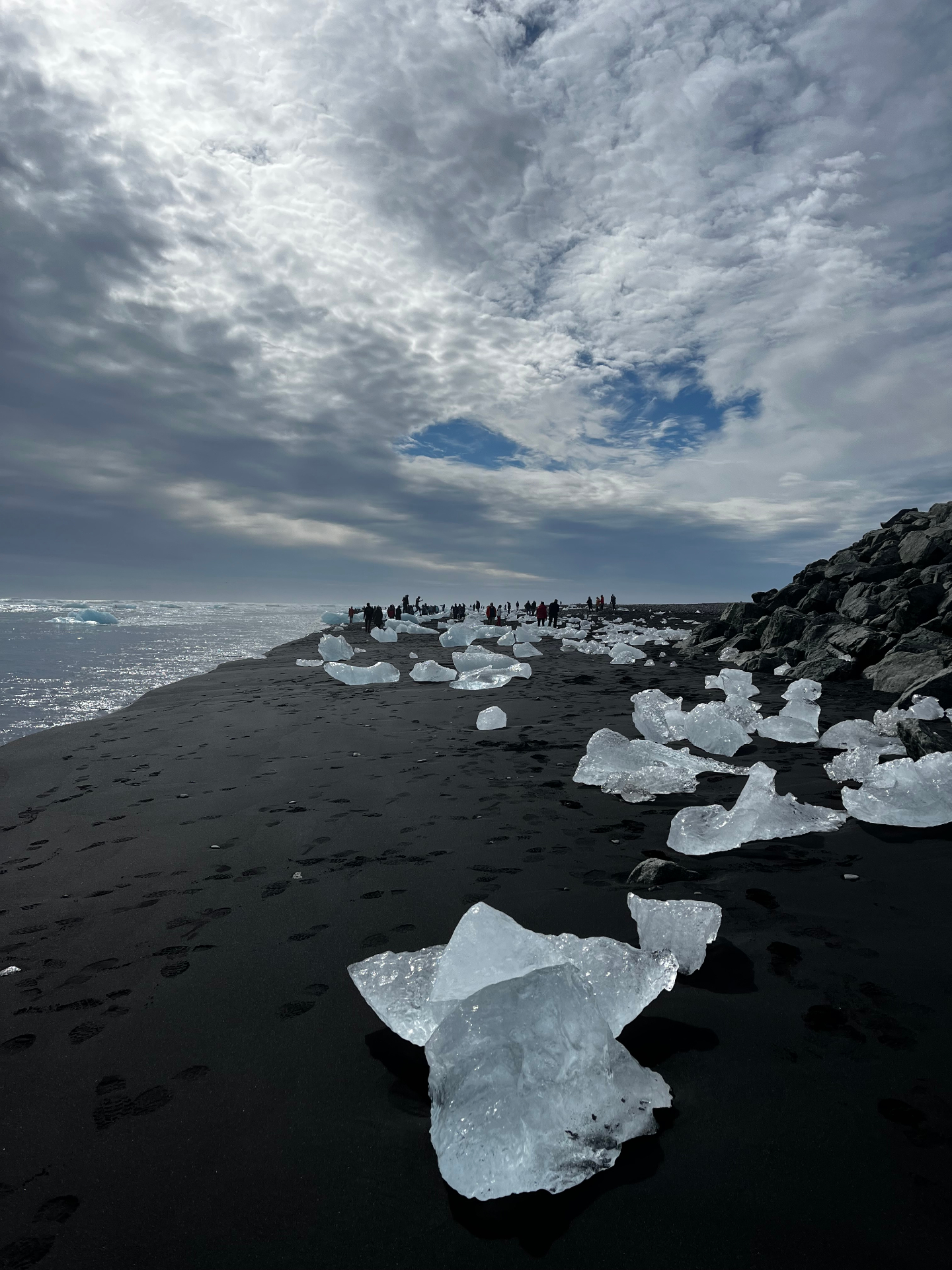
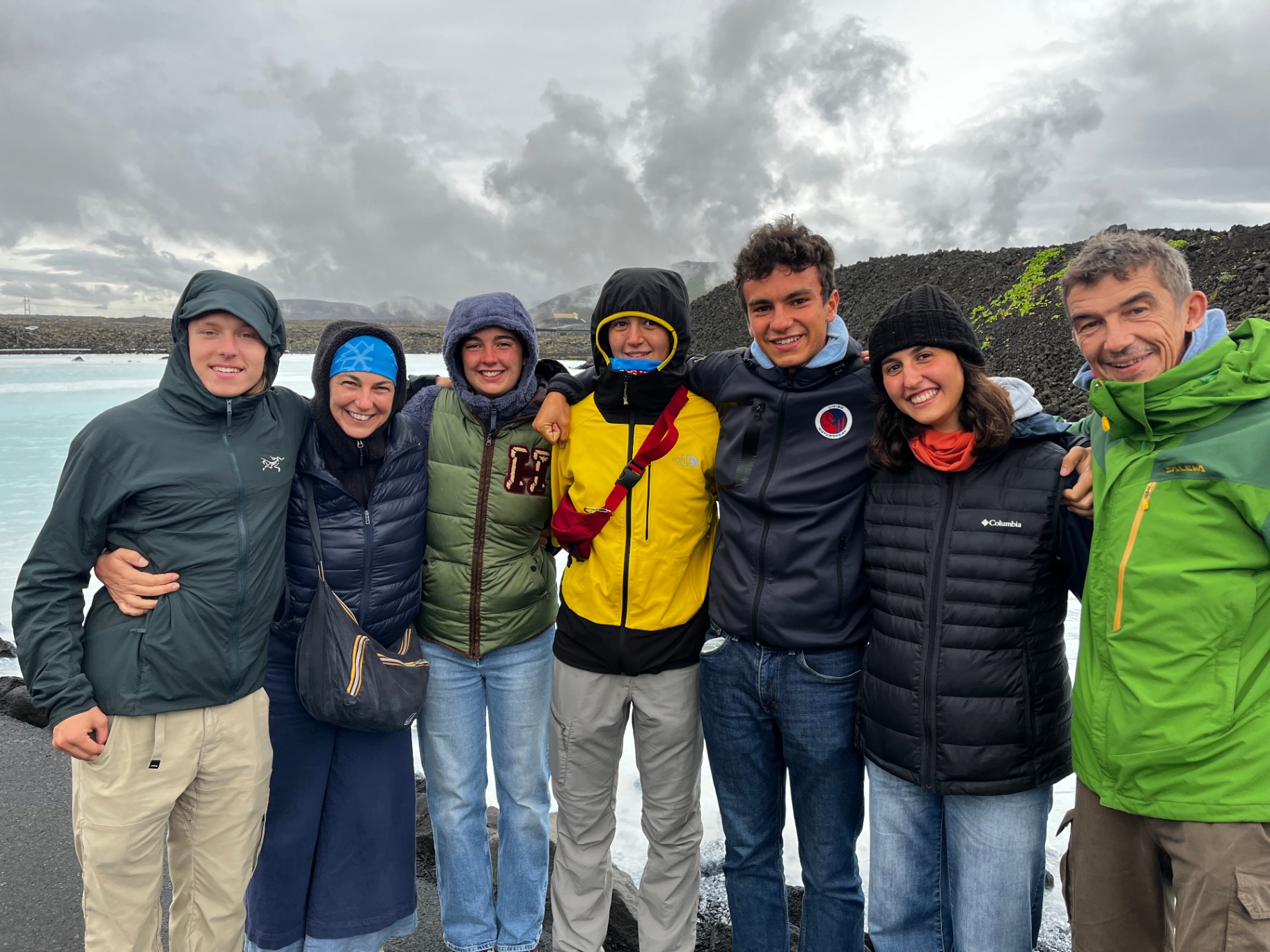
Our first stop was the Blue Lagoon (just to admire the color — tickets are over 100$/person), then Grindavík and the Seltún geothermal area. After a luxurious dinner at a KFC outside Reykjavík, the backseats became our king-size beds.
Day 1 — August 18
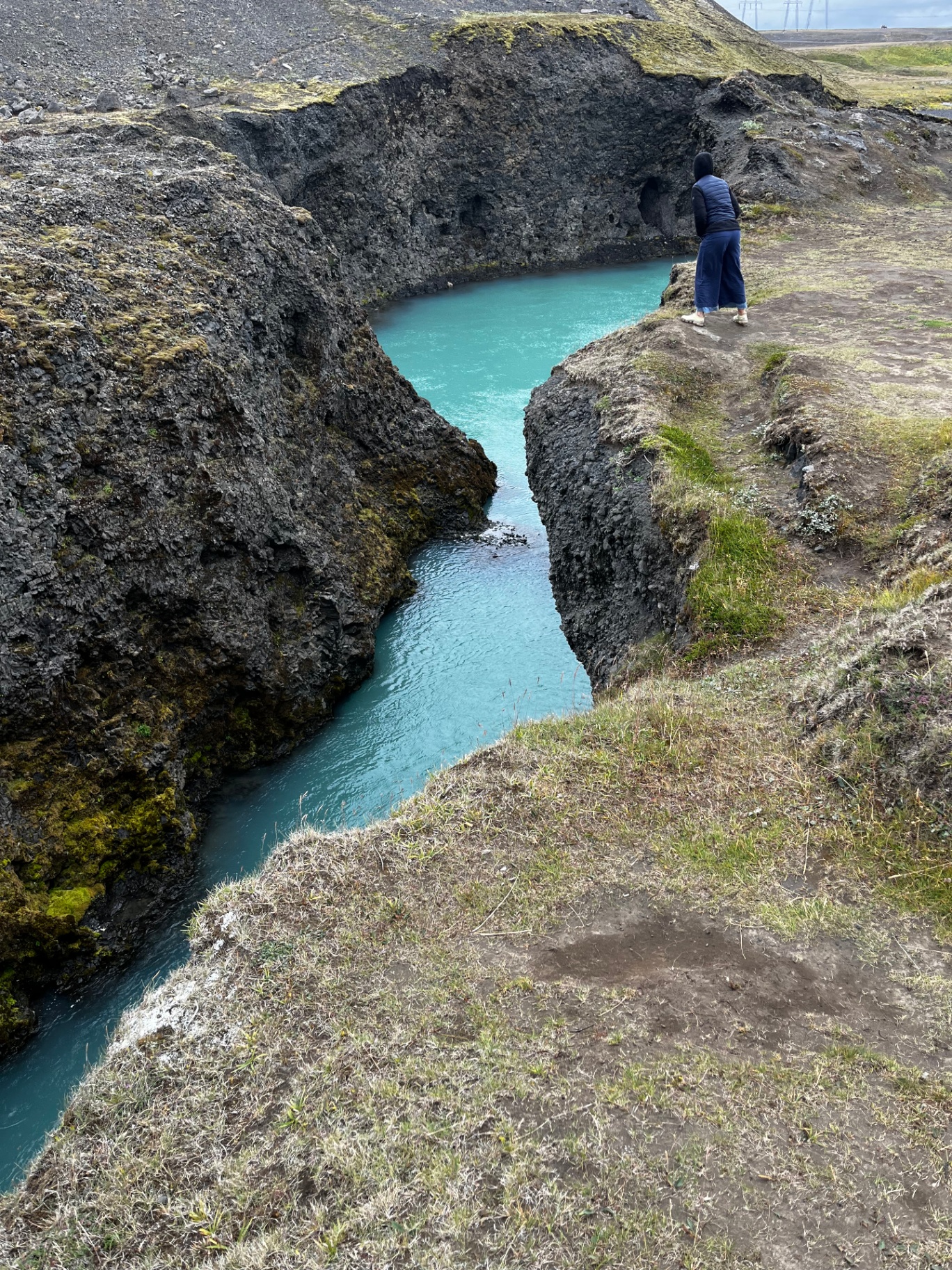
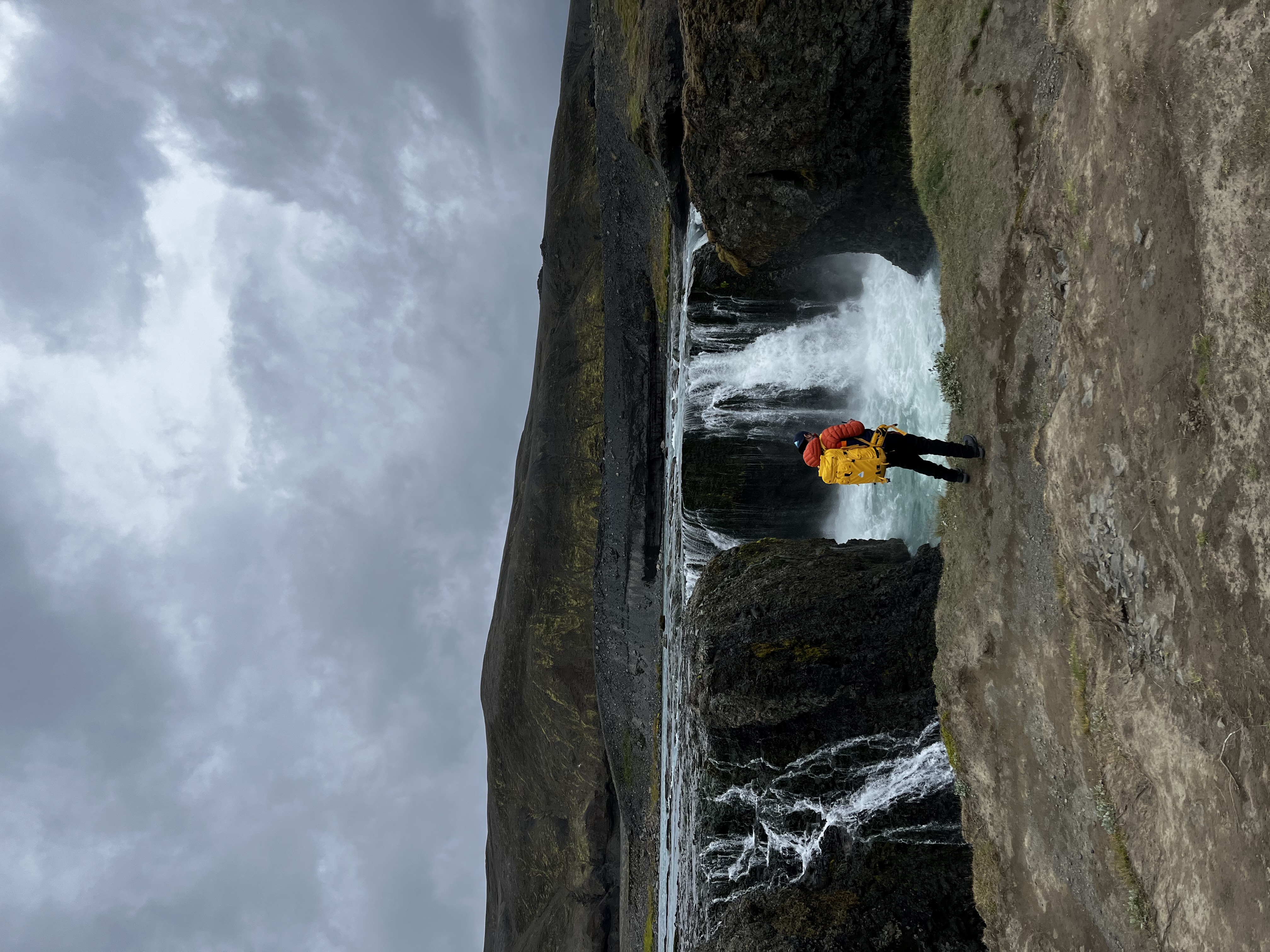
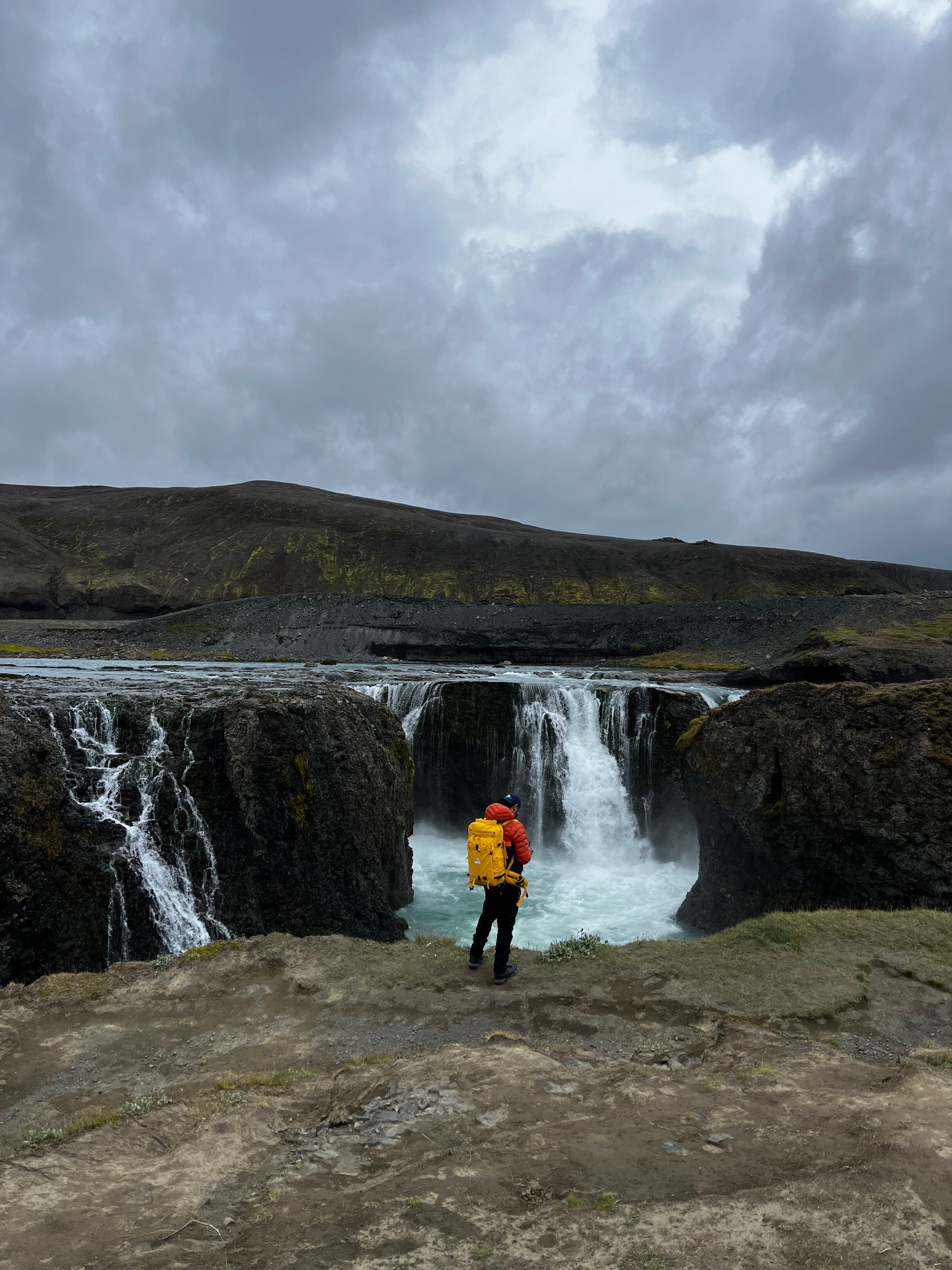
Seven adults squeezed into two cars feels much like sardines in tiny cans. But the Highlands were waiting. Hjálparfoss was our first waterfall (every time you read "foss" in Iceland, a waterfall is involved), surrounded by basaltic columns. We then hit the gravel road 332 to reach Háifoss, the fourth-tallest waterfall in Iceland.
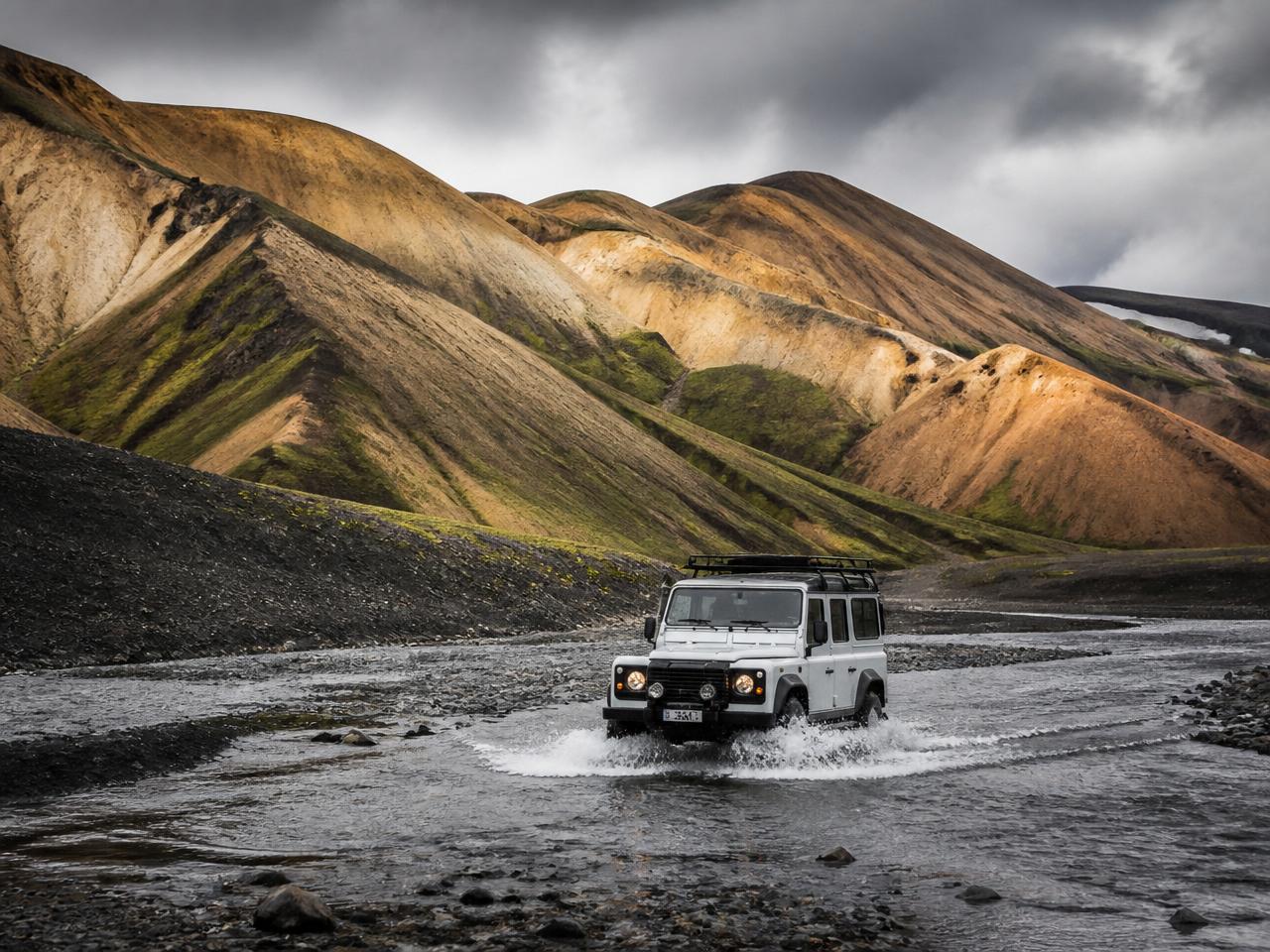
Then it was time for the Highlands proper and the campsite of Landmannalaugar — the start of one of Iceland's best treks. We did the small 6km loop through two types of lava fields and colorful mountains. Driving on to Hvolsvöllur on the F208/F26, a river cut the road in front of us. Put the car in first gear, go slow but steady, follow the red flags. Mama was nervous but we made it. Dinner at Valhalla Restaurant, a Viking-themed burger place with axe throwing.
Day 2 — August 19
Probably one of the days that won't leave my mind for years: the Sólheimajökull glacier. Thanks to a friend of my dad's, we contacted Valerio, an Italian guide who organises glacier tours. Our tour lasted 6 hours instead of the commercial 3.
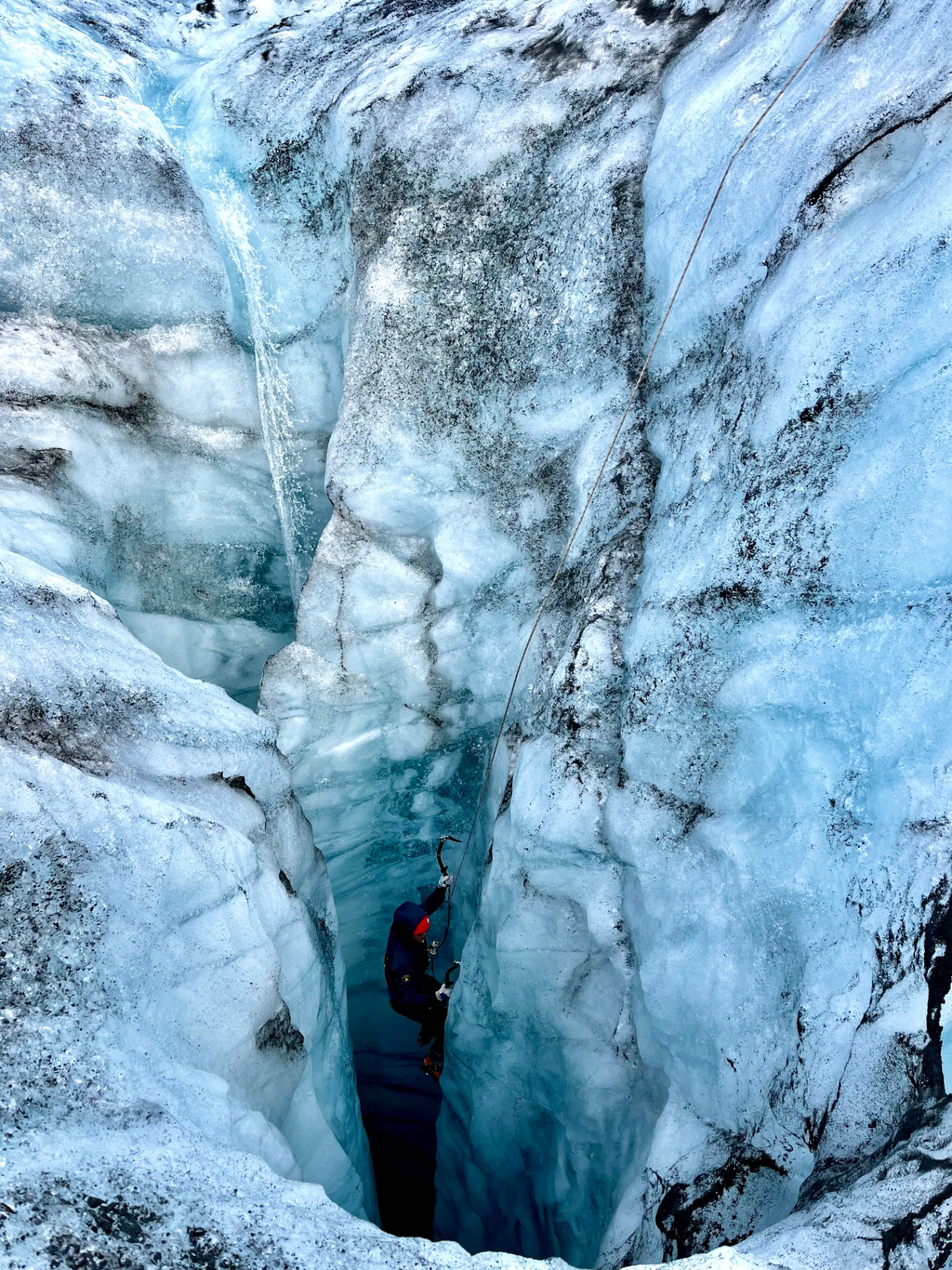
Volcanic ash covers parts of the glacier, creating a beautiful contrast between shining blue ice and black ash. We learned basic ice climbing techniques and progressed to harder walls, descending into a crevasse where a small river flowed and finding our way back up. Ice climbing is a challenge between you and nature — every step calibrated perfectly, the ice axes your new hands. Valerio also explained that up to 16 meters of ice thickness melt each year — the effects of global warming are extremely visible.
We ended the day at Skógafoss, the Reynisfjara viewpoint and the famous Black Beach, before reaching our camping at Kirkjubær II — where our tents had finally arrived.
Day 3 — August 20
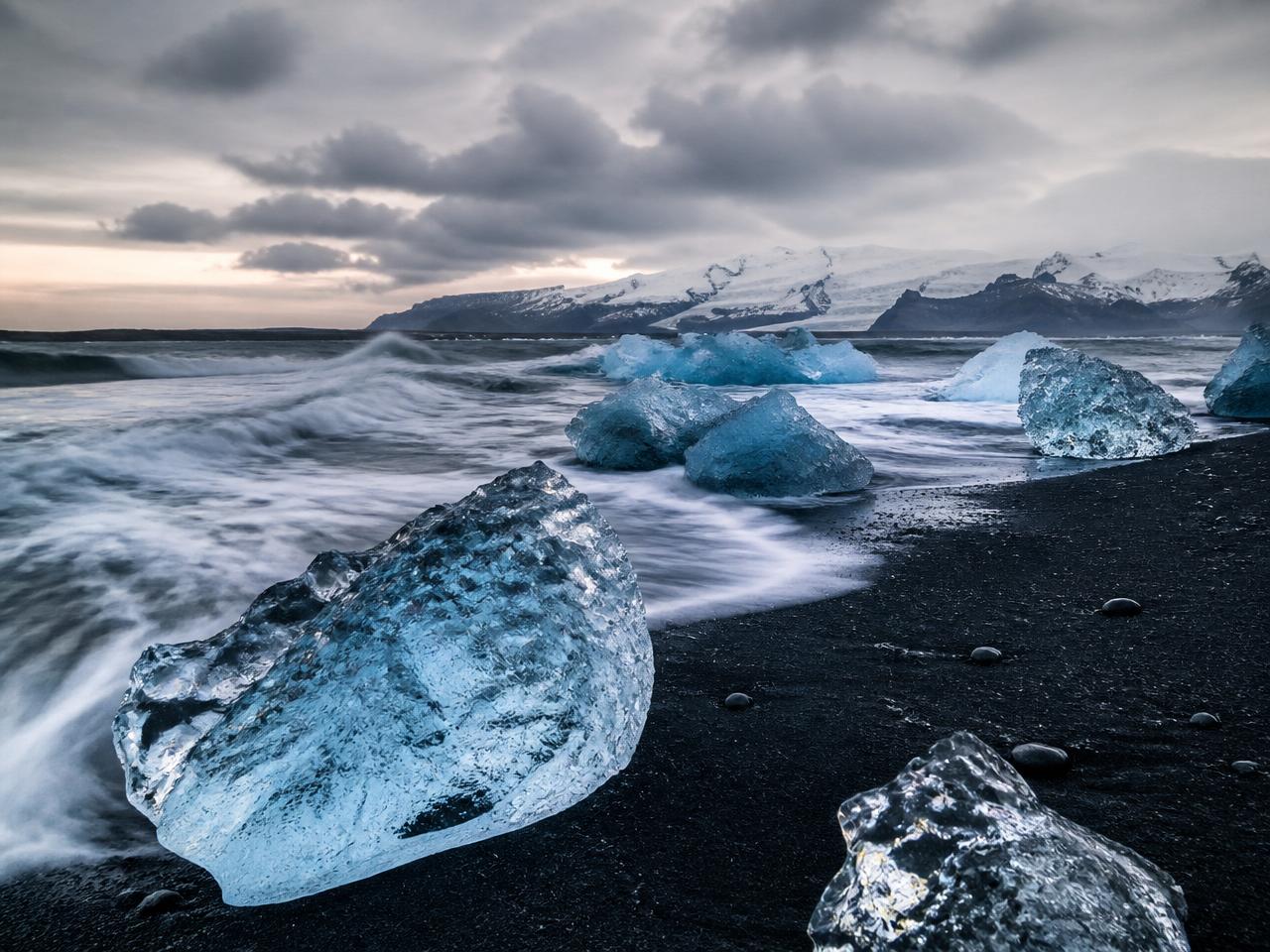
At 9:30am we reached the Fjallsárlón lagoon (a less touristy Diamond Lagoon), then the popular Glacier Lagoon connected directly to the ocean — which opens onto Diamond Beach, where icebergs get stuck on the black sand, dancing with the waves. In Iceland "popular" is never a synonym for crowded: even in August we never felt suffocated by other tourists.
Day 4 — August 21
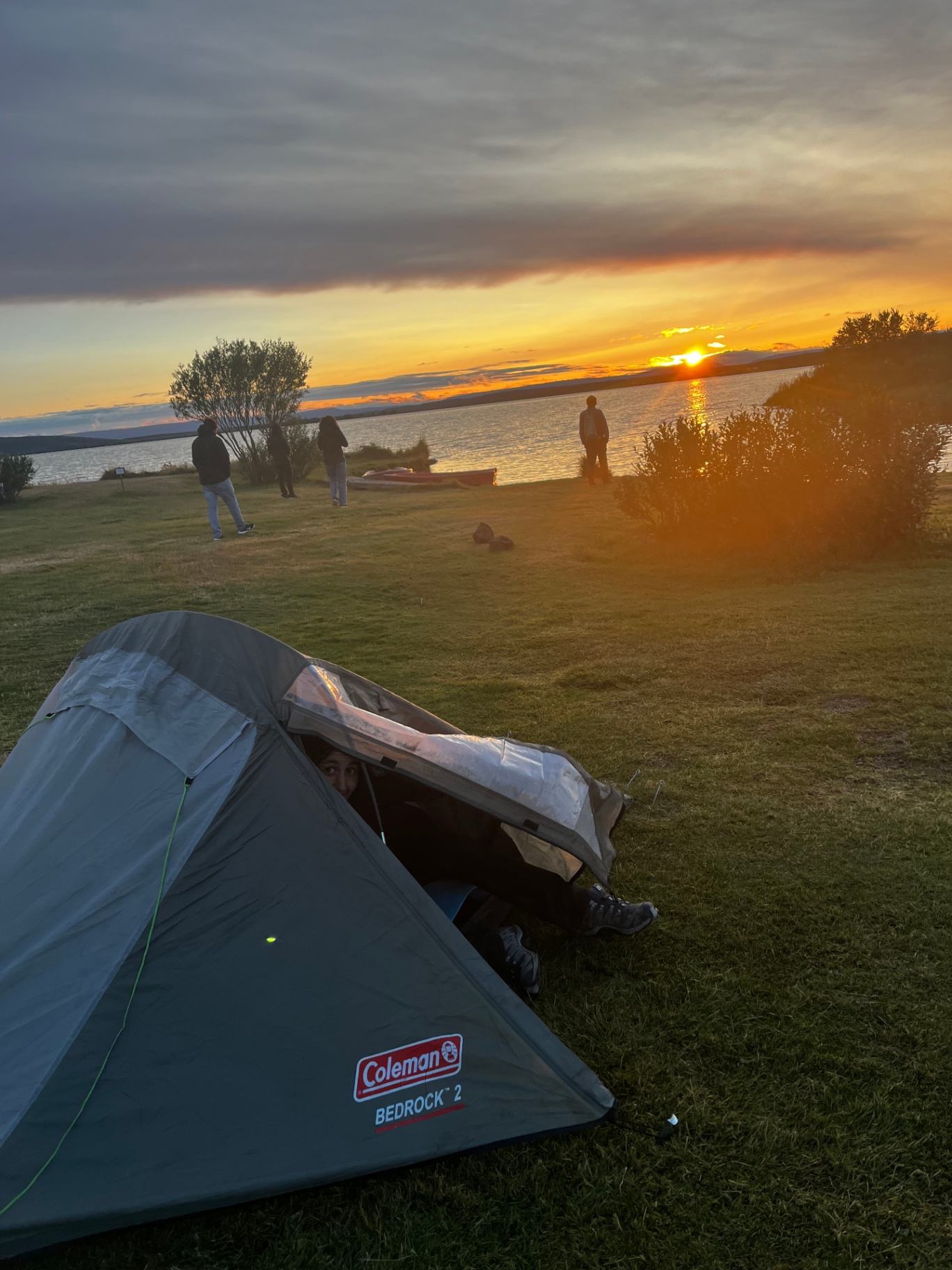
First stop Borgarfjarðarhöfn, the so-called Puffin Marina. Puffins are like flying penguins: they spend just four months a year on land, are monogamous, and recognise each other by rubbing beaks. Visit early morning or at night — we arrived at 11am but got lucky with a couple of late movers. Then Stuðlagil Canyon (the rain had turned the water brown, but still spectacular) and Dettifoss, the largest waterfall in Europe by volume, set in a lunar lava landscape. It was freezing — near 0°C at night.
Day 5 — August 22
The Mývatn area, full of geothermal activity: the Hverir fumaroles and mud pots, then Krafla and Leirhnjúkur. Mývatn means "midges" — and we understood why. We stopped at Goðafoss (admirable both from above and below) and Akureyri, Iceland's fifth-largest town. A random roadside stop at a free hot spring felt incredibly smart after seeing Blue Lagoon prices. Night at the well-equipped Camping Varmahlíð.
Day 6 — August 23
A great challenge for our nerves. After Fosslaug waterfall we headed to the northern Highlands and the F35, which crosses Iceland through two glaciers and the lava desert between them. We stopped at Hveravellir, a geothermal oasis with the best natural hot pool of our trip. Then, 10 minutes later, I hit a rock and got a completely flat tire — no spare in the trunk, 70km from paved road. Panic. Using a repair kit, strong glue and a lot of luck, we patched it well enough to crawl forward, stopping every 30 minutes to re-inflate. After 3.5 hours we reached the road and found JB Auto Repair, whose kind owner fixed it perfectly. Lesson learned: off-road, go slow (under 40km/h) and avoid big rocks. Night at the excellent Reykholt Campsite.
Day 7 — August 24
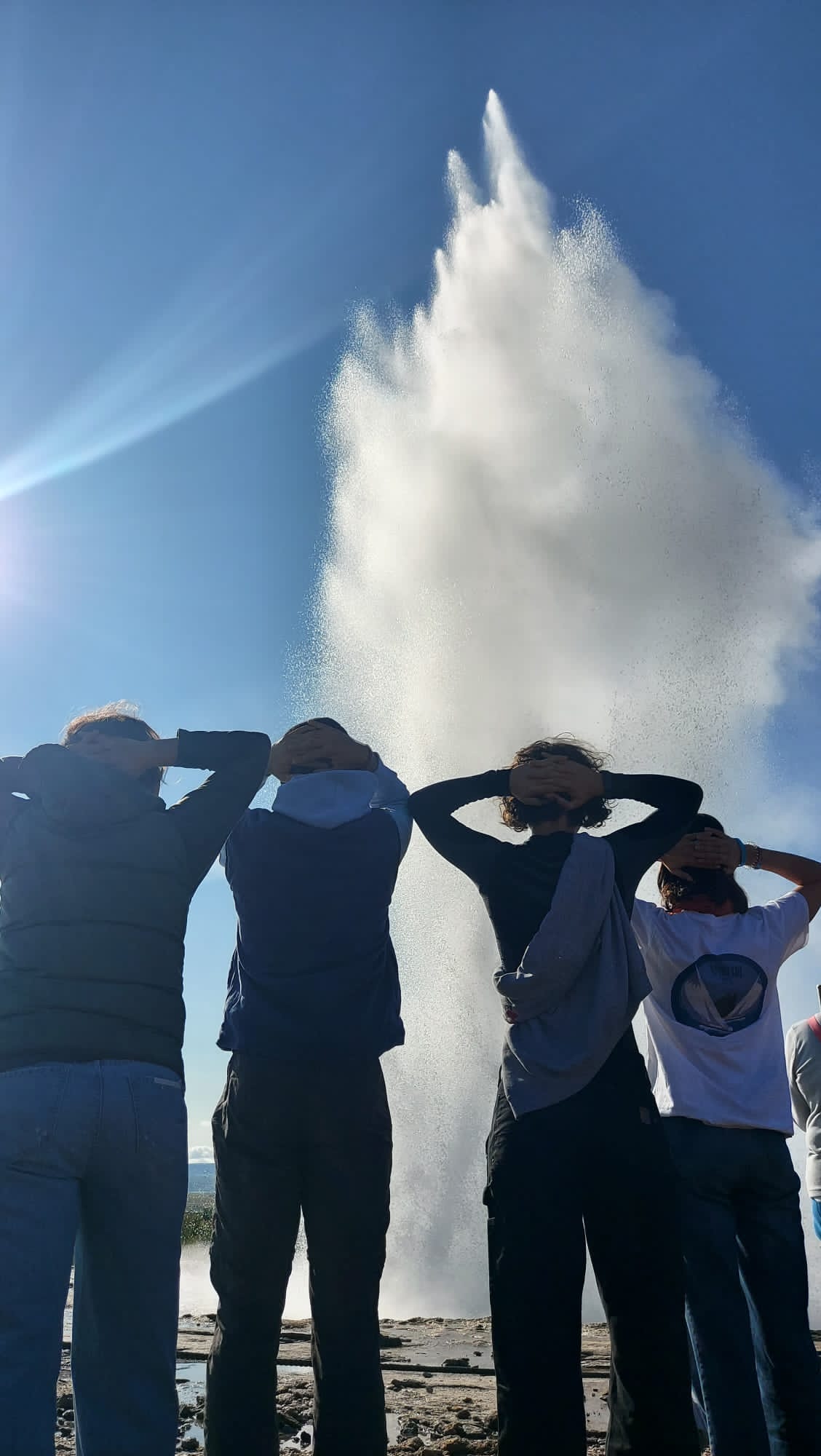
One last thing on the agenda: the Golden Circle — the Great Geysir, the Þingvellir National Park, and the Gullfoss waterfall, our last of the trip, leaving us with a bittersweet taste. Last stop before Keflavík was the Geldingadalir volcano, still active, where we saw lava formations from the 2021–2022 eruptions.
We hope this long article can help you somehow in NOT organizing your next trip to Iceland. Have fun!
— Leo and the No Plans Travelling team