Off-roading in Brazil: the Emotions Trail
By Leopoldo Cavina · Aug 2024
Trip highlights
Follow the itinerary
7 stops · Tap a pin to see where we stopped.
Read the journey
The day-by-day tale, exactly how it happened.
When people think of Brazil, they usually envision two main attractions: the stunning, endless white beaches of Rio and Fortaleza, and the mysterious beauty of the Amazon rainforest.
The itinerary we opted for this summer, however, showed us that Brazil can be much more than that: dunes with natural pools, rural villages serving incredible food, river deltas hiding an astonishing variety of animals, and so much more.
In this short recap, you will find all the details of what we did and some interesting ideas for your next trip.
Our 10-Day Itinerary
Day 1 — MXP → GRU → Rio de Janeiro
Malpensa offers direct flights to São Paulo at pretty convenient rates with Latam Airlines. We booked our tickets just a couple of weeks before departure and thus paid a relatively high price, approximately 950 euros per person. It takes around 10 and a half hours to get to South America, but the ride is smooth, and having no connections is always a plus (considering our last experience with Lufthansa during our Iceland trip). We landed in São Paulo late in the evening and immediately hopped on a bus to Rio de Janeiro. We used the standard FlixBus app to book our seats for around 20 euros per person. We decided to skip São Paulo mainly because of time constraints and not wanting to get entangled for too long in large metropolitan areas — it is the largest and most populated city in Brazil, with almost 12 million inhabitants.
The bus ride from São Paulo to Rio takes approximately 6 hours and the bus is extremely comfortable. Just one thing: Brazilians are more extreme than Americans when it comes to air conditioning. The temperature inside was freezing, so make sure to always have a small blanket or a heavy sweatshirt with you when travelling.
We arrived at the Novo Rio bus terminal early in the morning, tired but ready for a full day of exploration around the most stunning city in the world.
A couple of tips to get the most out of the city:
- Use Uber to get around. Prices are extremely convenient and you always get a car within 5 minutes. Pro tip if you are travelling alone: use Uber Moto (motorcycles). The price is ridiculously cheap and you get the true Rio adventure by breezing past traffic.
- Stay near one of the three most famous beaches: Ipanema, Copacabana, or Leblon. These neighbourhoods are considered the safest for tourists and are great starting points to tour the main attractions.
We stayed at a hostel in the Leblon area. Staying in a hostel was definitely a brave (& bad) choice, especially for a family like ours — forget the comforts of European hostels; here the average hostel is in much worse condition. Spend slightly more for a hotel room and you won't regret it. However, the area is incredible: residential, safe, and full of nice local restaurants. Our recommendation would be the Confeitaria Rio Lisboa — an incredible café serving all-day baked products of great quality at a low price. Try the "Calabrese" and the sandwich with grilled "queijo".
After a well-deserved dip in the ocean at Leblon beach we headed for the most known attraction in Rio: the statue of Christ the Redeemer, at the top of Mount Corcovado. Here we faced two options: take the expensive cable car, or hop on small buses to the top (paying separately for access to the statue). We paid 40 Brazilian Reais for the one-way bus ticket and made a bold but rewarding choice: we climbed down the mountain ourselves. If you are in good physical shape I would definitely recommend it — the trail is easy and in very good condition.
The visit is worth it even if expensive and even though the statue can get extremely crowded. The breathtaking view over the city will be a lasting memory. If you climb down, the whole tour takes about half a day.
We got down at around 3:30pm and had little time to reach Copacabana Beach, our final destination of the day, which gives its best at dusk. Keep in mind that during the winter the sun is up only until around 5/5:30pm in Southern Brazil. The beach turns first orange and then purple as a surreal atmosphere wraps the area. What a spectacular moment! We concluded our day with a wonderful dinner at Sardinha Taberna Portuguesa — awesome local fish in a slightly fancier fashion.
Day 2 — Rio de Janeiro (GIG → NAT)
For our second and last day in Rio we explored the City Centre and Port area in the morning, followed by an incredible tour around the Favela of Vidigal in the afternoon, before our late-night flight to Natal in the Rio Grande do Norte region.
The downtown area offers very interesting spots, but keep in mind that not all areas are walkable for tourists — it is best to stick to a few. If you are cautious and pay attention to your surroundings, walking downtown can be of immense value. The feeling we got was of a business area that has already witnessed its best days and is experiencing a slow decline; several high-rise buildings seem completely empty.
To kick off our day we Ubered to Escadaria Selarón in the Lapa neighbourhood — one of the most famous places in Rio, featured in several international music videos. It is an incredibly colourful set of steps created by Jorge Selarón as a tribute to the Brazilian people.
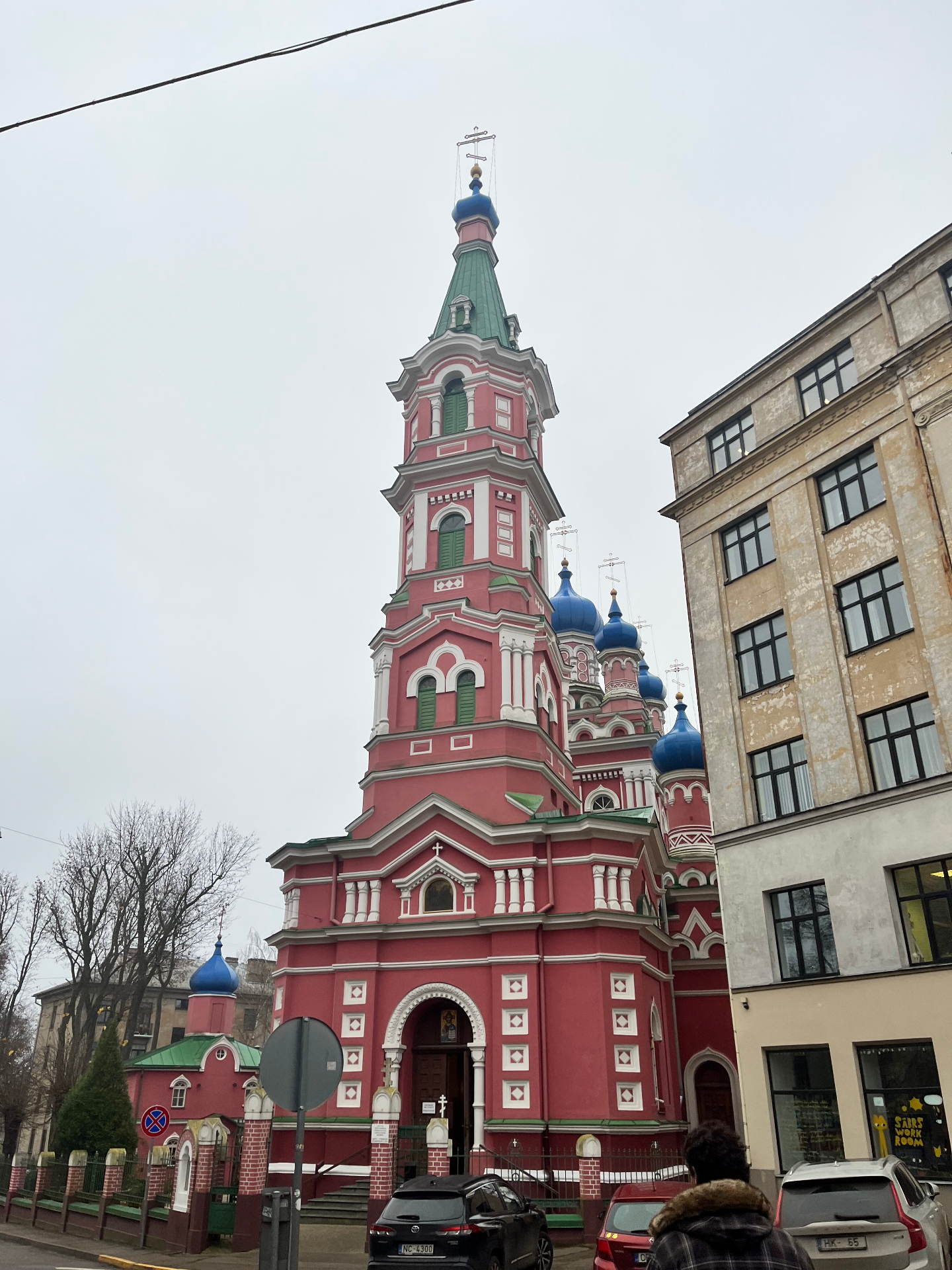
From the steps we walked about 10 minutes to the city's Cathedral — of incredible charm even for European tourists used to impressive catholic buildings. Its external shape recalls old Mayan palaces; dedicated to Saint Sebastian, patron saint of Rio, it can host up to 20,000 people.
Our last stop of the morning was the port area, requalified in the early 2010s. Here you find one of the most futuristic sites in the Rio region: the Museu do Amanhã by Calatrava. The outside look is amazing and the view over the port makes it a go-to place. Make sure to check it out!
Vidigal
Visiting a favela may sound dangerous, right? Mh… not really. Vidigal is called a "tourist-friendly favela", meaning that during the day and with some guidance the visit is not only very safe but strongly encouraged. We organised a 5-hour tour with a local guide who has lived in the favela since his early days: Russo (vidigaltours). The tour is usually 160 reais/person, but we got a special "family discount" and paid around 100 reais each — asking is always free of charge!
We first hiked up one of the most beautiful viewpoints in Rio: Morro Dois Irmãos (about 55 minutes). During the easy path you get breathtaking views over Vidigal and Rocinha, the largest favela in Brazil, just on the other side of the ridge. The two have historically been enemies, with violent fights over drug control claiming lives on both sides until a recent truce which still lasts today.
Once on top you'll find an incredible view spanning Ipanema, Leblon and Copacabana beaches and Christ the Redeemer. On the way down we visited the main locations of the favela — bars and rooftops that make you question several times whether you are in the right place. It serves as food for thought for Europeans like us who have in mind just drug criminals and crumbling buildings, to instead see ordinary people dancing on rooftops while sipping beers. Don't get me wrong — poverty is still at incredibly high levels, and the difference between the shacks in Vidigal and the high-rises just a couple of miles east is staggering. Overall the visit was awesome and I would not be able to recommend it enough.
From Vidigal we rushed back to Leblon to pick up our luggage before heading to Rio's international airport (GIG) for our flight to Natal. Domestic flights in Brazil are not cheap, especially if not booked in advance — we paid around 175 euros each (1,050 Brazilian Reais) one way with Latam Airlines.
Day 3 — Natal → São Miguel do Gostoso · Emotions Trail, Day 1
Once landed in Natal, 30 minutes past midnight, we needed a car to continue our trip and finally begin the Emotions Trail. We got a Jeep Renegade (4x2) from Localiza for around 750 euros for 7 days. This might seem a bad deal, but more than 400 euros were for the different return location (we returned the car in São Luís). Otherwise, renting a car in Brazil is quite cheap — under 25 euros per day if you return it to the same place.
Two things to consider when renting for the Emotions Trail (Natal to São Luís):
- A 4x4 is highly recommended. You don't need to exaggerate — a 4x4 Jeep Renegade does the job excellently if you already have some off-road and desert experience. Unfortunately, a misunderstanding with the staff left us with a 4x2.
- You might need to pay extra for the international driving licence certificate in Brazil — in our case an extra 85 USD, valid 5 years. It took 15 minutes of paperwork.

We slept in Ponta Negra, south of Natal, in a nice hostel offering private rooms for families with an exceptional local breakfast. The following morning we skipped the famous (and now crowded) Pipa Beach and headed north to save time.
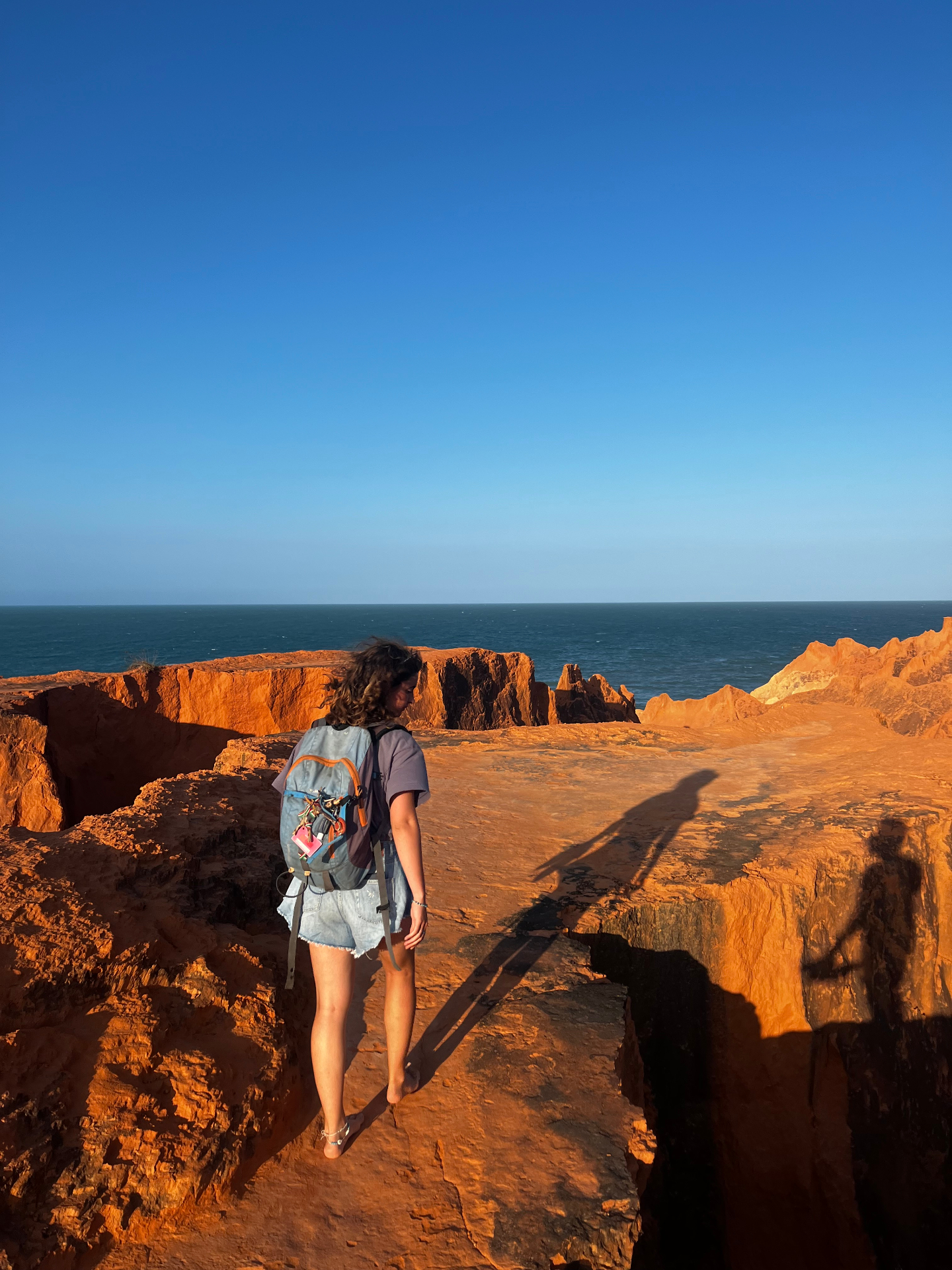
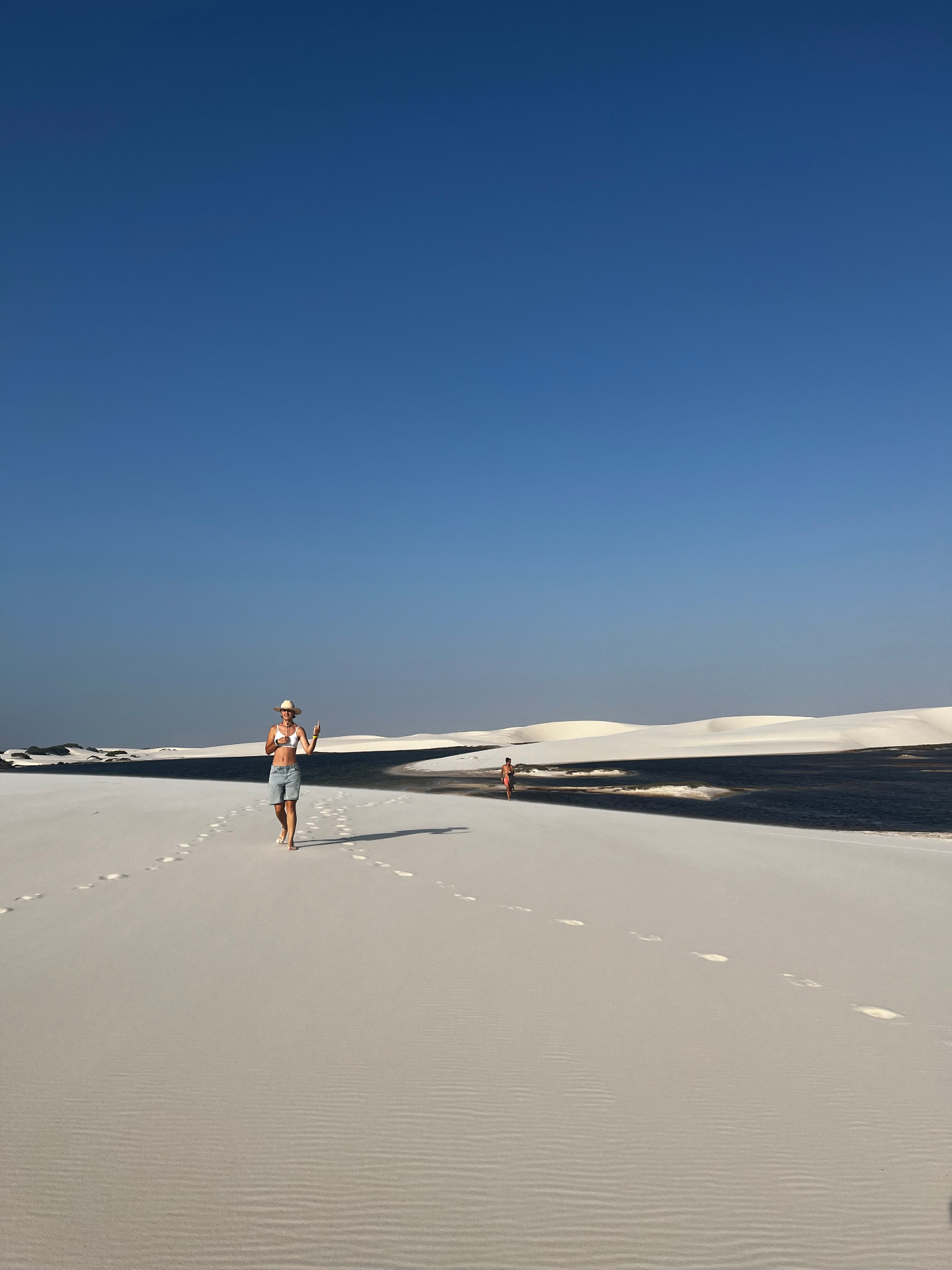
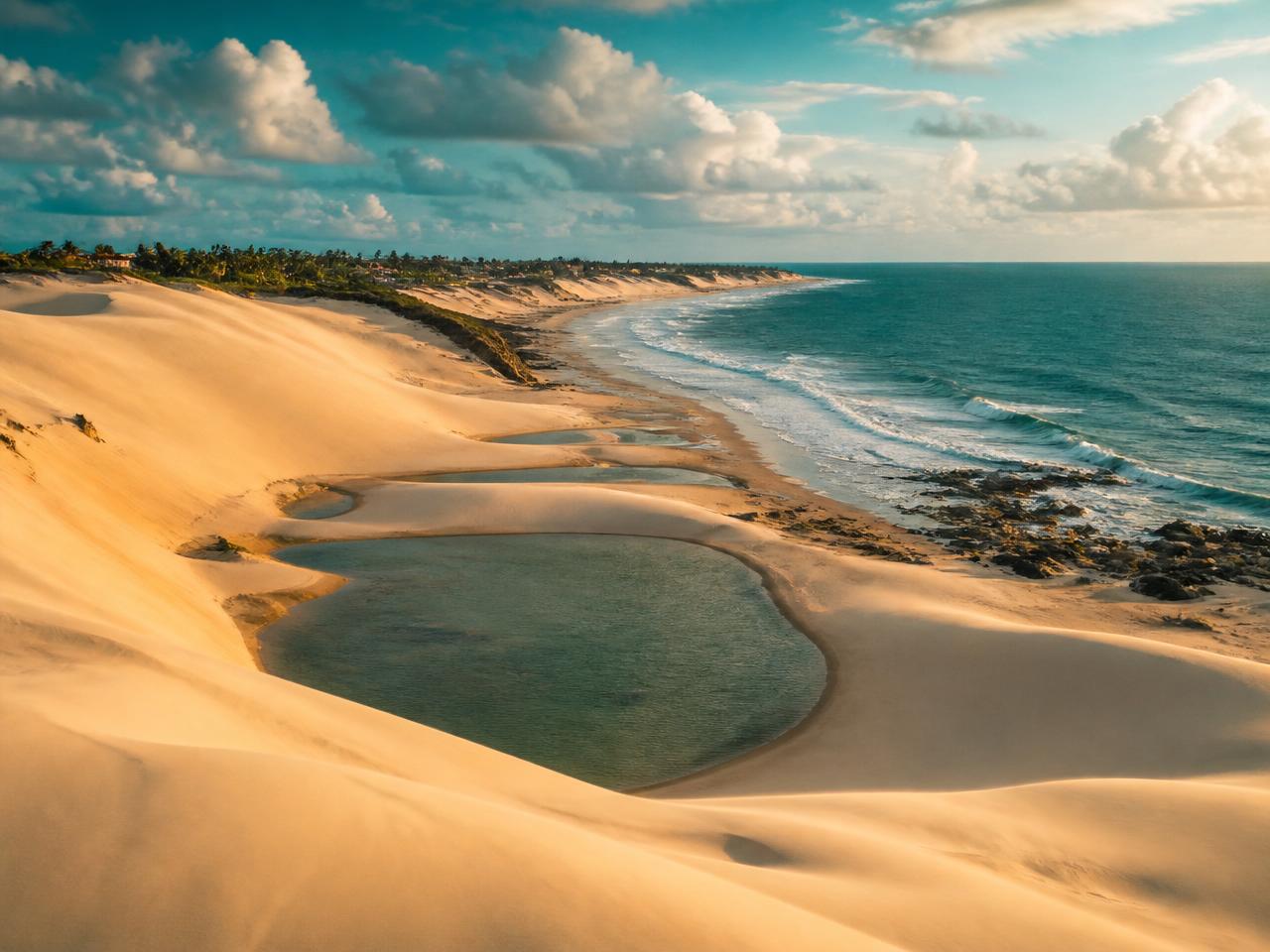
From Ponta Negra we drove around 45 minutes to our first stop: Genipabu beach, famous for white dunes that dive into the ocean, creating a wonderful scenery. If you want to learn about the colonial history, visit the Forte dos Reis Magos, a 1599 fortress built by the Portuguese.
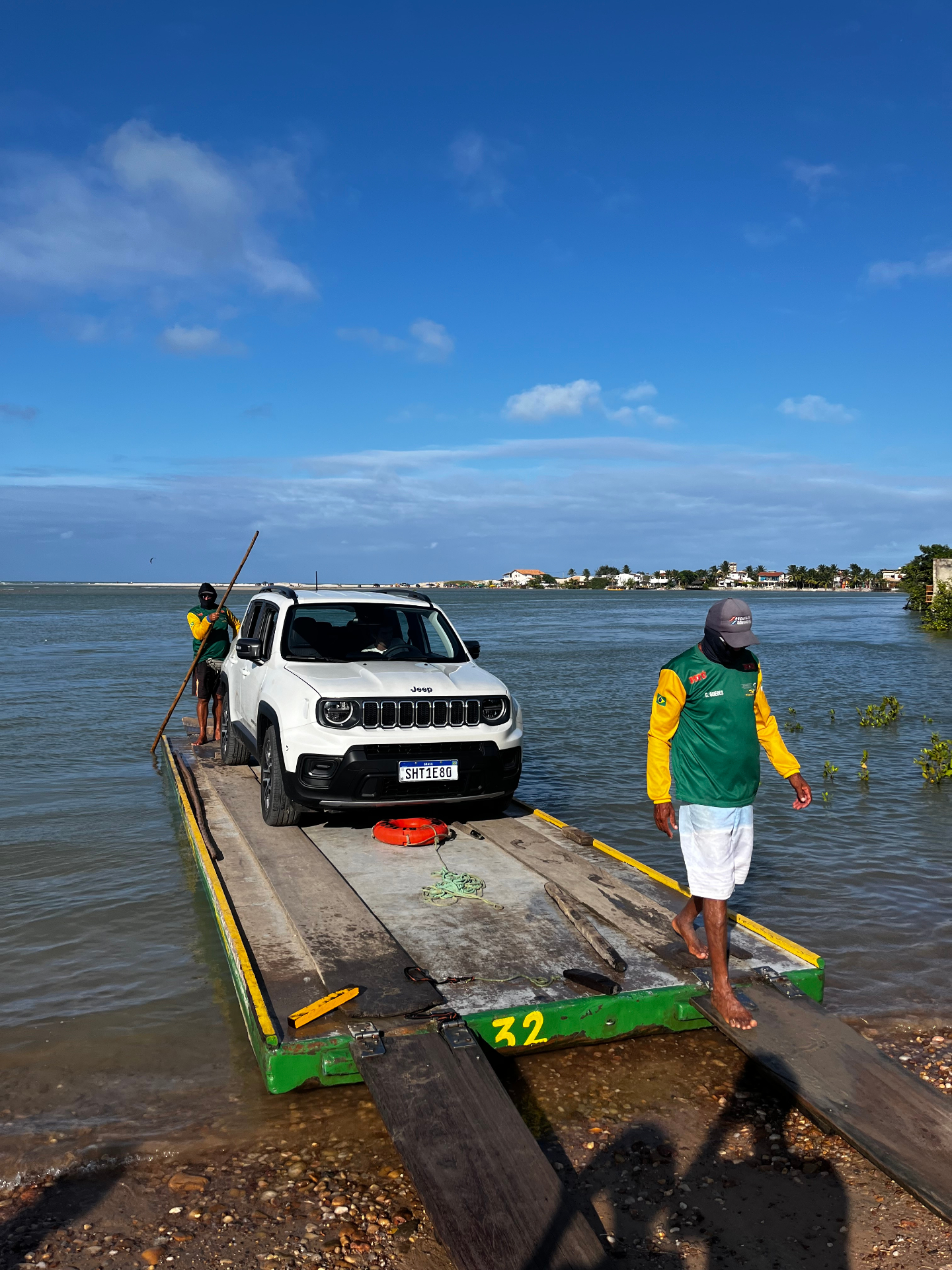
From here, get ready for one of the craziest things of the trip: crossing a small river on a tiny barge — locally known as the Travessia de Balsa. From Genipabu, head north and put this pousada on Google Maps to reach the crossing site.
As we proceeded, we made our way to the Dunas de Maracajaú, renowned for stunning beaches (during summer, October–February, the coral reef is easily visible here). Our next destination was São Miguel do Gostoso, a charming coastal town popular among Brazilians. We booked our stay at Pousada Primavera, where the staff took great care of us and prepared an awesome breakfast. Together with other places along this coast, it is a preferred destination for windsurfing enthusiasts — check it out in summer if you're a wind chaser.
Day 4 — São Miguel do Gostoso → Pacem · Emotions Trail, Day 2
The road trip continues…